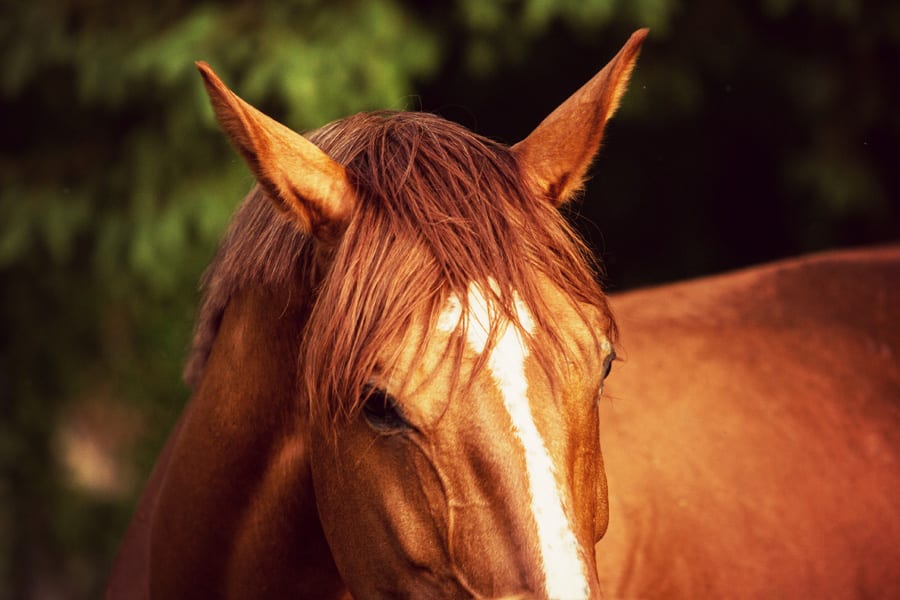
Your relationship with your horse is not built only in the difficult sessions or the moments that look impressive. It is built in the small moments: how you ask, when you release the pressure, where you place a boundary and how you respond when things do not go as expected. Small moments become patterns. Patterns become expectations. And expectations shape the horse who meets you tomorrow.
You keep waiting for the big breakthrough
Most horse owners can name the moment they want to change.
They want the horse to finally walk into the trailer. To stand still at the mounting block. To stop pulling toward the grass. To ride past the corner where he always spooks. To stay connected when another horse leaves the arena. To stop becoming tense the moment the saddle appears.
Those moments feel important because that is where the problem becomes impossible to ignore. The rope is tight. Your heart is beating faster. Someone is watching. You have somewhere to be. Your horse is no longer responding in the way you hoped he would, and it feels as though everything depends on what happens next.
So you search for the big answer. A better technique. A more effective exercise. A new piece of equipment. The one session that will finally change everything.
But often, the big moment did not begin in the big moment.
It began when your horse looked away and you did not notice. When his neck became a little higher but you continued as though nothing had changed. When he shifted one step toward you at the gate and you automatically moved out of his way. When he offered the right answer and your hand stayed closed for two seconds too long. When you asked again before he had time to process the first question. When you felt yourself becoming frustrated and called it determination.
None of these moments looks dramatic. Most would never make it into a training video. Yet together they teach your horse what your cues mean, whether his smaller responses matter, how predictable you are and what he can expect when he becomes unsure.
The transformation you are looking for may not begin with doing more. It may begin with seeing more.
Your horse is learning in the moments you are not calling training
We often imagine that training begins when we enter the arena, pick up the whip or decide to work on a particular problem. The horse does not divide life so neatly.
He is learning when you catch him. When you put on the halter. When you lead him through the gate. When you ask him to move over while grooming. When you tighten the girth. When you stand beside the mounting block. When you let him pull you toward a patch of grass because you are talking to someone. When you walk him back to the field after a difficult session.
Every interaction can create an association. A cue is followed by something. The horse does something, and what happens next teaches him whether that response is worth repeating. A certain person, place or object can begin to predict comfort, pressure, food, confusion, relief or fear.
This does not mean you must control every second or turn your entire life with your horse into a rigid lesson. It means that learning does not wait for you to announce that the lesson has started.
Research in equine learning theory explains that horses learn through associations and consequences. They notice which signals predict which events, and which responses make pressure appear, change or disappear. Timing and consistency matter because they help the horse identify what, exactly, produced the outcome (McLean & Christensen, 2017; McGreevy & McLean, 2007).
In plain language: your horse cannot learn from what you meant. He learns from what happened.
You may have meant to reward standing still, but if you opened the gate while he was pushing into you with his shoulder, he may have learned that pushing gets the gate opened. You may have meant to ask for one step back, but if you released the pressure when he lifted his head and braced, the release came at the wrong moment. You may have meant to comfort him at the trailer, but if you moved away only when he rushed backwards, he may have learned that rushing backwards creates distance.
No single imperfect moment ruins a horse. Relationships are not that fragile. But repeated moments become a pattern, and the pattern becomes information your horse can rely on. That is why the smallest details matter.
Small does not mean insignificant
A horse’s first response is often much smaller than the behaviour that finally gets our attention.
Before he spins on the trail, his ear may lock onto something behind the hedge. His breathing may pause. His neck may rise by a few centimetres. His walk may lose rhythm. Before he barges through the gate, his eyes and nose may already be pointing past you. His shoulder may drift half a step closer. Before he bites when you tighten the girth, the muscles around his muzzle may become tense, his ears may change position or his body may move away from the saddle.
These signs do not give you a diagnosis. One ear position does not tell you exactly what a horse feels, and one tail swish does not prove pain, fear or disobedience. Behaviour has to be read in context, as a sequence and alongside the whole horse.
But small changes tell you that the situation is changing.
If you notice them early, you have more choices. You can slow down. Change your position. Clarify the cue. Ask an easier question. Re-establish a boundary. Check the equipment. Give the horse time to look. Or decide that a physical assessment is needed before continuing.
If you miss them, the horse may need to communicate more loudly. By the time he pulls away, kicks out, refuses to move or explodes forward, both of you have fewer good options.
Good observation is not about becoming afraid of every expression. It is about recognising change early enough that you can remain thoughtful instead of waiting until the behaviour forces you to react.
This is the same shift MBH asks you to make when you look beyond the behaviour itself and begin asking what may be happening underneath it.
The five small moments that change everything
1. The moment before the behaviour
Most people respond to the part they can see clearly: the bite, the pull, the refusal, the spook. A skilled horse person becomes interested in what happened immediately before it.
What changed in the environment? Where was the horse’s attention? What did your body do? Which cue arrived? Did the rope become tight? Did another horse leave? Did the horse move closer before he pushed through you? Did you speed up because you expected resistance?
This is not about blaming yourself. Sometimes the trigger has nothing to do with you. A sound, pain, separation, footing or a previous experience may be important. The purpose of looking earlier is to find the point where the pattern was still small enough to influence.
Imagine a horse who pulls toward grass. The obvious behaviour begins when the rope runs through your hand. But the useful moment may have happened three steps earlier, when his eye left you, his nose turned and his shoulder followed. If you reconnect his attention and organise the shoulder there, you may never need the large correction that comes later.
Early does not mean constantly correcting the horse. It means noticing the first meaningful change and responding in proportion to it. Sometimes that response is a cue. Sometimes it is a pause. Sometimes it is simply preparing your body so you do not become late.
2. The moment the horse begins to try
The first correct answer may not look like the finished behaviour.
At the trailer, it may be the weight shifting toward the ramp before a foot moves. At the mounting block, it may be one second of stillness. In a backup, it may be the chest softening and the weight leaving the front feet. With a frightened horse, it may be one ear returning to you while he continues to look at the object.
If you are waiting only for the complete answer, you may miss the beginning of it.
This matters because the consequence that follows a response helps shape whether that response appears again. When pressure is used, the release is the clearest part of the lesson. It tells the horse which change made the pressure go away. Research and equitation-science guidance repeatedly emphasise that delayed or inconsistent release can make cues unclear and may reinforce a different response from the one the rider intended (McLean & Christensen, 2017; McGreevy, 2009).
Suppose you ask the horse to step back. He shifts his weight back, but you keep pulling because you want three steps. He lifts his head and takes one hurried step sideways. Then you release to reorganise yourself. From your perspective, he nearly got the answer. From the horse’s experience, the clearest release arrived after sideways movement.
Rewarding the first try does not mean settling forever for a half-answer. It means building the final answer from pieces the horse can understand. First the weight shift earns a release. Then one step. Then two. As the horse begins to understand what you are asking, you can gradually ask for more.
The release does not have to be dramatic. A hand softening, your body becoming neutral, the whip becoming still, a short pause or the removal of an obstacle can all carry information. The important question is whether the change was clear enough and close enough to the response for the horse to connect them.
3. The moment you feel yourself reacting
There is a point in many difficult interactions when the problem stops being only about the horse.
You feel the rope tighten and your jaw tightens too. He moves away from the mounting block for the fourth time and your movements become faster. He stops at the trailer and you hear the old thought: Not again. He spooks and your hands close before you have decided what you want him to do next.
You do not need to be perfectly calm to work well with a horse. But you do need to notice when your emotional state begins changing the information your horse receives.
Horses can discriminate between some human emotional expressions, and research suggests they can remember expressions previously shown by particular people (Smith et al., 2016; Proops et al., 2018). This does not prove that a horse reads your private thoughts or directly absorbs every emotion you feel. The more useful truth is simpler: emotions change bodies.
Fear changes your balance and grip. Frustration changes your timing. Shame makes you rush when someone is watching. Uncertainty makes a cue appear and disappear. The need to succeed can keep you asking after the horse has already tried.
The small moment of self-awareness is the second in which you notice that change before it takes over the session.
Feel your feet. Exhale. Name what is actually happening. Decide what response you need from the horse. Then make the next action deliberate. Self-regulation is not pretending to be peaceful while you remain braced. It is recovering your ability to observe, think and choose.
Sometimes the most regulated decision is to become clearer or firmer. Sometimes it is to reduce the question. Sometimes it is to step away because neither you nor the horse can learn safely in that state. The goal is not to avoid emotion. It is to stop emotion from silently writing the lesson.
4. The moment after the answer
Horse owners often focus so hard on getting the response that they forget what happens after it.
Your horse finally stands beside the mounting block, and you immediately climb up. He takes one step toward the trailer, and you ask for another before he has finished the first. He softens on the reins, and your hand continues holding because you are afraid the softness will disappear.
But the moment after the answer is where the horse discovers whether the answer brought relief, stability and understanding — or simply led to more pressure.
A pause can be part of the reward. It allows the horse to experience the new position without being immediately pushed out of it. It gives both nervous systems a chance to settle and gives you time to notice whether the horse truly recovered or only stopped moving.
This does not mean every response needs a long break. In fluent work, cues and answers can flow together. But when a horse is learning, afraid or changing an old pattern, one quiet breath after the right answer can be more valuable than five rushed repetitions.
Positive experiences with humans can also leave durable memories. In one study, young horses trained with positive reinforcement showed increased contact and interest toward people, and aspects of this positive response remained months later (Sankey et al., 2010a). Another study showed that reinforcement history influenced how horses perceived and interacted with humans (Sankey et al., 2010b).
The practical message is not that food rewards are required for every horse or every lesson. It is that the emotional quality and consequence of repeated interactions matter. The horse remembers more than the task. He can also learn what being with a person tends to feel like.
5. The ordinary moment you usually ignore
The relationship is not built only when something goes wrong.
It is built when you enter the field without immediately expecting your horse to come to you. When you wait for him to organise his feet before asking him to walk through the gate. When you notice that grooming one area makes his skin twitch and choose to investigate rather than call him sensitive. When you ask him to move over and release the pressure as soon as he responds, instead of automatically asking for more. When you return him to the field without letting him drag you through the last ten metres.
Ordinary moments are powerful because they are repeated so often. A ten-minute trailer session happens occasionally. Leading, haltering, grooming, feeding and moving through doorways may happen every day.
If those daily moments are rushed, unclear or inconsistent, the horse practises disconnection hundreds of times. If they become thoughtful, they give you hundreds of opportunities to build responsiveness, confidence and trust without organising a special training session.
Small moments are not extra work added to horsemanship. They are the everyday moments that shape the relationship you are building.
What this looks like in real life
The horse who will not be caught
You enter the field with the halter behind your back. Your horse lifts his head. You keep walking directly toward him because stopping feels as though you are letting him win. His feet move. You keep going after him. Before long, what began as an attempt to catch him has turned into you chasing him around the field.
The obvious problem is that he will not let you catch him. But look at the smaller moments. Did his attention change when he saw the halter? Did your speed increase as you came closer? Did you approach his head directly? Did you reach toward him before he was comfortable with you being that close? Does being caught always predict leaving his companions, hard work or discomfort?
Research shows that details of human approach can alter horses’ responses. In Birke and colleagues’ study, speed was especially important: faster approaches increased stronger avoidance responses. This does not create a universal catching recipe, but it confirms that how we approach is part of the interaction, not an irrelevant detail (Birke et al., 2011).
Try to change the conversation before he leaves. Notice the first lift of the head. Instead of continuing straight toward him, adjust your approach and slow your feet. Allow him to observe you without using every pause to sneak closer. When his attention returns, approach again. If he moves, notice whether he is simply adjusting his position or actively trying to leave, and respond accordingly.
Then look beyond the field. What does the halter predict? If every catch ends freedom and begins discomfort, better technique may help, but the larger pattern still needs to change. Catch him sometimes for a short positive interaction. Teach him to bring his nose to the halter. Make leaving and returning orderly. Address pain or fear connected to the work that follows.
The breakthrough is not the day you finally corner him. It is the series of small moments in which your approach becomes easier to understand and being caught no longer predicts only something your horse wants to avoid.
The horse who walks away from the mounting block
You position him beside the block. You climb up. His hindquarters swing away. You step down, bring him back and repeat. By the fifth attempt, you are moving faster and holding the reins tighter. He begins leaving before you reach the top step.
The large behaviour is walking away. The smaller details may include the way the saddle feels, your weight in the stirrup, a lack of balance, a cue he never understood or the simple learning that moving makes the person climb down.
First, rule out physical discomfort and saddle-related concerns. A task-specific change around mounting deserves to be taken seriously. Then separate the pieces. Can he stand at the block before you climb it? Can he move his shoulders and hindquarters away from you and toward you in response to a clear cue? Can he stay still while you stand above him? Can he remain relaxed with movement around the saddle? Can he accept weight in the stirrup and remain organised?
Watch the first moment he prepares to leave. Perhaps his weight shifts. Perhaps his eye turns away or his hind leg steps under him. Bring him back before the whole body escapes, then soften the instant the correct position returns. When he stands, do not always make standing predict immediate mounting. Sometimes let the right answer be followed by a pause and walking away together.
You are not distracting him from the problem. You are teaching him, step by step, what he needs to understand in order to stand quietly, while making sure that standing there is physically comfortable for him.
The horse who becomes tense when you pick up the reins
You are walking on loose reins. Your horse feels relaxed. You shorten the reins to prepare for a transition, and his neck stiffens. His mouth opens. His steps become shorter. You think he is resisting the contact, so your hand becomes stronger.
But the smallest moment may tell you more than the later resistance. What happens at the exact second the length of the reins begins to change? Do both reins shorten evenly? Does your elbow become fixed? Do you close your leg at the same time, creating forward and backward signals together? Does the pressure release when he responds, or does the new tension simply become the place he is expected to stay?
Studies measuring rein tension show that rein signals are detailed, dynamic events rather than one simple amount of contact. Work by Eisersiö and colleagues has examined how signal magnitude, the horse’s response and the timing of release relate during rein cues. The research does not give every rider one perfect number, but it reinforces a central learning principle: the horse needs a signal he can distinguish and a release connected to the response (Eisersiö et al., 2021; Eisersiö et al., 2025).
Instead of asking only how to make him accept the reins, notice the transition into contact. Prepare your own body. Shorten without pulling backwards. Ask one clear question. Soften your hand when he gives you the response you were looking for. Check whether your seat and leg are supporting the same answer or creating a conflict.
A lighter horse is not made by holding more carefully forever. He becomes lighter when small signals have clear, dependable meaning.
The horse who spooks at the same corner
Every time you approach one side of the arena, you prepare for the spook. Your leg closes. Your reins shorten. Your eyes move toward the object. Your horse raises his head and drifts away. You hold more strongly because you knew it was coming.
From your side, you are preventing the problem. From his side, he may notice your whole body changing before you even reach the corner.
This does not mean you caused the original fear or that imagining confidence will make the object harmless. It means your preparation may have become part of the pattern. The corner predicts a braced rider; the braced rider predicts stronger pressure; stronger pressure may make the corner feel even more significant.
Begin earlier, but not by becoming tighter. Check whether you still have simple responses before the fear rises: direction, rhythm, bend, a transition and a simple step away from your leg. Let him notice the object without allowing the whole body to leave. Keep your eyes focused on where you are going and continue to guide him clearly. Reward the first moment his attention returns to you or he settles back into a steady rhythm.
If he is already too overwhelmed to respond, create enough distance for him to regain his attention and respond to you again rather than continuing to push closer.
The goal is not simply to get past once while your horse is barely able to stay responsive. It is to create repeated experiences in which the horse notices what concerns him, remains able to respond and learns to recover.
Confidence is built through recovery, not through the absence of every reaction.
The horse who pushes through the gate
You unlatch the gate and your horse’s nose reaches through the opening. You step sideways to make room. His shoulder follows. By the time the gate is wide enough, he is already taking you with him.
Nothing dramatic happened. He did not rear or bolt. Yet this small interaction may happen twice every day, teaching him that moving forward gets the gate opened and that you will adjust your body around him.
The change begins before the gate moves. Establish where his feet need to remain. Ask him to wait. Touch the latch. If he steps forward, close the space and reorganise the feet. If he waits, open a little. Pause. Walk through only when you invite him.
Be clear without turning the doorway into a punishment. The boundary is not about proving ownership of the gate. It protects both of you and teaches the horse that your cues still matter even when something ahead is highly motivating.
Then be consistent on the way back. If the rule exists only when you have time, the horse receives two different lessons. Consistency does not require anger or a stronger correction. It simply requires the boundary to remain clear every time.
Why tiny changes can create such large results
Small moments become powerful through repetition.
One late release may cause no visible problem. Hundreds of late releases can make a horse slow, defensive or dependent on stronger pressure. One rushed approach may be forgotten. Repeated rushed approaches can make the sight of a halter predict tension. One moment of standing quietly may seem unimportant. Repeated moments in which stillness brings relief can make standing a safe and understandable answer.
The horse is also learning about you as a person. Horses can adjust their behaviour to human attention and use details such as body orientation in social tasks (Krueger et al., 2011). They can show lasting responses connected to earlier interactions with people (Sankey et al., 2010a; Sankey et al., 2010b). This does not mean every movement has one universal meaning. It means the history of interaction matters.
Over time, your horse forms expectations. Does this person’s light cue matter? Does pressure stop when I find the answer? Will my first sign of concern be noticed? Does a boundary stay the same? Does confusion bring more speed, or does the question become clearer?
Trust is often described as a feeling, but for the horse it also has a practical history. A trustworthy person is predictable enough to understand, observant enough to notice change and capable of protecting safety without becoming emotionally chaotic.
The same is true for responsiveness. It is not created only by stronger aids. It grows when the horse repeatedly experiences that a small cue is worth noticing and a small correct response is recognised.
This is why a profound change can begin with something almost invisible: a hand that softens sooner, a body that stops blocking the path, a pause after the try, a boundary established before the horse is already on top of you, or one breath that stops frustration from becoming the cue.
The danger of becoming obsessed with every detail
Once horse owners understand that small moments matter, some become afraid of making a mistake.
They analyse every ear movement. They hesitate before every cue. They worry that one imperfect release will damage the relationship. Their desire to become more aware makes them less natural, less clear and sometimes less safe.
That is not the goal.
Awareness should increase your options, not paralyse you. No person has perfect timing in every interaction. No relationship is built from flawless moments. Horses can learn, adapt and recover. You can correct an unclear cue, repeat the exercise and make the next release better.
The purpose is not to notice everything. It is to notice what is relevant: changes in attention, posture, rhythm, tension, direction, understanding and your own emotional state. Then use that information to make the next decision more accurate.
Do not turn observation into a story you cannot prove. A horse looking away is not automatically disrespectful, shut down or processing trauma. A lick and chew does not have one guaranteed emotional meaning. A lowered head is not always relaxation. Ask what else is happening in the body, what happened before, what happens next and whether the pattern repeats.
Evidence-informed horsemanship is not about attaching a scientific-sounding label to every movement. It is about staying curious enough to test your interpretation against the whole situation.
A practical way to train your eye
You do not become observant by trying harder to stare at the horse. You become observant by knowing what to compare.
Choose one ordinary interaction — leading from the field, standing at the mounting block, moving over in the stable or making a downward transition. For several days, pay attention to the same sequence.
Notice where your horse looks before the behaviour changes. Watch which foot moves first. Feel when the rope or rein becomes tight. Observe how soon you release. Notice what your shoulders and feet are doing. Ask whether the next repetition becomes easier, the same or more tense.
Video can be useful because it allows you to notice details that are easy to miss in the moment. You may see that the horse offered the answer earlier than you realised, that your body stepped into his path or that your hand remained closed after the transition. Use video as information, not as a reason to criticise yourself.
After the interaction, write down facts before interpretations. ‘He raised his head, stopped walking and looked toward the gate’ is more useful than ‘He disconnected from me.’ ‘I shortened the rein, held my breath and leaned forward’ gives you something you can change. ‘I ruined it’ does not.
Then choose one small experiment for next time. Release from the weight shift. Approach more slowly. Ask him to move over before his shoulder enters your space. Pause after the correct step. Exhale before picking up the rein. Change one detail and observe what changes in the horse.
This is how horsemanship becomes a conversation rather than a performance.
Seven questions for the moment you feel stuck
- What happened immediately before this? Look for the environmental change, cue, body position or shift in attention that came before the visible problem.
- What was the first small sign? Find the earliest change in rhythm, posture, direction, breathing or focus — without pretending one sign gives you a complete diagnosis.
- What did my horse try? Notice weight shifts, pauses and partial responses. The first try may be smaller than the finished answer you wanted.
- What did I release? Identify the exact movement present when the pressure changed. That is more important than what you intended to reward.
- What did my body communicate? Check your feet, shoulders, focus, speed, breathing, balance and grip before increasing the cue.
- Is the horse still able to learn? A horse who is overwhelmed, in pain or far beyond his ability to respond may need safety, distance or assessment before repetition.
- What is the smallest useful change I can make next? Do not change ten things at once. Choose the detail most likely to make the answer clearer and observe the result.
Small moments do not replace clear boundaries
Paying attention to subtle signals does not mean allowing unsafe behaviour to continue until you have analysed every possible cause.
If a horse enters your space dangerously, protect your body and move him out. If he turns his hindquarters toward you, re-establish a safe position. If he begins pulling you in a direction you did not ask for, regain enough control to keep both of you safe.
Then look at the smaller moments that led there.
Understanding and boundaries belong together. The horse may have been afraid, but he still needs to learn how to remain aware of your space when he is afraid. He may have been confused, but you still need to interrupt a movement that can injure you. He may have pain, and the immediate behaviour may still require a safe response while you stop the task and arrange appropriate assessment.
Compassion without clarity can leave people unsafe. Control without understanding can make the horse’s need to protect himself even stronger. Learning to lead through clarity rather than control means being able to hold both: listening to what the behaviour is telling you while still providing clear direction and necessary boundaries.
When behaviour becomes sudden, intense or potentially dangerous, however, understanding it does not mean you have to work through it alone. Some situations require experienced, individual support to identify what may be driving the behaviour and determine how to move forward safely. This is the purpose of the MBH Behavioural Rehabilitation programme.
The MBH approach does not ask you to choose between listening and leading. It teaches you to listen early enough that leadership can become more accurate — and to remain clear enough that listening does not become passivity.
The change in the horse begins with a change in what you notice
At first, progress may feel almost too small to count.
You notice the moment your horse begins to move into your space. Your horse responds to the first cue once instead of the third. He stands at the mounting block for one quiet breath. He looks at the trailer and returns one ear to you. You feel your hand beginning to brace and soften it before the rein becomes a fight.
None of these is the finished dream. But each is evidence that the pattern is changing.
As those moments repeat, the horse no longer has to become loud to be heard. You no longer have to become strong to be understood. The space between cue and reaction becomes a place where both of you can think.
Eventually, those small changes begin to show in the moments that once felt difficult. The horse loads because he has learned to follow your direction, respond to pressure and wait when you ask. He stands quietly for mounting because each step was taught gradually and discomfort was not ignored. He stays connected on the trail because you notice the first signs of concern and provide direction before they become a struggle. He respects your space because that boundary has been clear in a hundred ordinary moments before it was ever truly tested.
People may call it a breakthrough. But you will know it was built slowly.
It was built in the release nobody saw. The breath you took instead of reacting. The question you made clearer. The first try you recognised. The moment you chose not to push past what your horse’s body was telling you. The boundary you held without anger.
Your horse does not need you to create one perfect moment.
He needs enough small moments that begin to tell a different story.
Because the relationship you dream of is not waiting at the end of one extraordinary session. It is being created, quietly, in the way you meet your horse every single day.
If you want to learn how to see the moments that change everything…
…the MBH Academy will help you understand what your horse is communicating before the behaviour becomes a problem. You will learn how horses learn, how your timing and body position shape his responses, how to use pressure and release with greater clarity, how to recognise the difference between emotion, confusion and a missing response — and how to become more aware of yourself in the moments that matter most.
Explore MBH Academy →